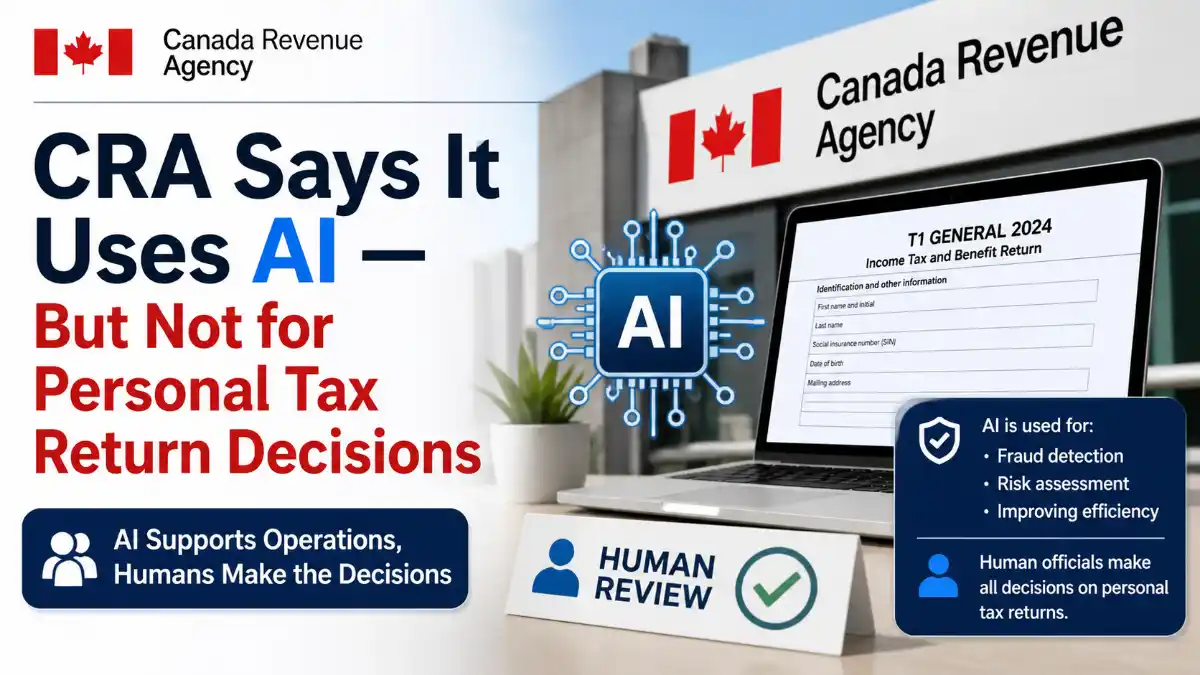
The Canada Revenue Agency (CRA) has confirmed that it is using artificial intelligence (AI) in parts of its operations, but it has clarified an important point: AI is not used to make decisions on individual personal tax returns.
This statement comes amid growing public concern about how governments are adopting AI and whether automated systems are replacing human judgment in sensitive areas like taxation.
How the CRA Is Using AI
The CRA has explained that AI is primarily used to support administrative and operational tasks rather than decision-making on personal filings.
Some of the key uses include:
- Identifying patterns and potential fraud
- Improving risk assessment processes
- Enhancing efficiency in processing large volumes of data
- Supporting compliance and audit selection
These applications help the agency manage workload and focus resources where they are most needed.
What AI Is Not Doing
The CRA has clearly stated that AI is not responsible for approving, rejecting, or altering personal tax returns.
Important decisions related to:
- Tax return assessments
- Adjustments to filings
- Individual taxpayer outcomes
are still handled by human officials.
This ensures that complex or sensitive cases receive proper review and judgment.
Why This Distinction Matters
The clarification is important for several reasons:
Transparency
Taxpayers want to know how their financial data is being processed and whether machines are making decisions that affect them.
Trust
Ensuring that humans remain involved in decision-making helps maintain public confidence in the tax system.
Accountability
Human oversight ensures that decisions can be reviewed, explained, and corrected if necessary.
Public Concerns Around AI in Tax Systems
Globally, there is increasing debate about the role of AI in government services. Key concerns include:
- Lack of transparency in automated systems
- Potential bias in algorithms
- Reduced human oversight
- Errors in automated decision-making
By clarifying its approach, the CRA aims to address these concerns proactively.
Future of AI at the CRA
While AI is not currently used for personal tax return decisions, the CRA is expected to continue expanding its use in areas such as:
- Data analysis and fraud detection
- Service automation
- Internal efficiency improvements
However, any future expansion is likely to include safeguards to ensure fairness and accountability.
What This Means for Taxpayers
For taxpayers, the key takeaway is clear:
- Your personal tax return is still reviewed by humans
- AI may assist behind the scenes but does not make final decisions
- You retain the right to appeal or question any assessment
This balance between technology and human oversight aims to provide both efficiency and fairness.
Conclusion
The CRA’s confirmation highlights a careful approach to adopting AI—leveraging its benefits while maintaining human control over critical decisions.
As AI continues to evolve, transparency and responsible use will remain essential to ensuring trust in public institutions and systems like taxation.